
Scaling Vision Screening to Strengthen Child Eye Health and Learning
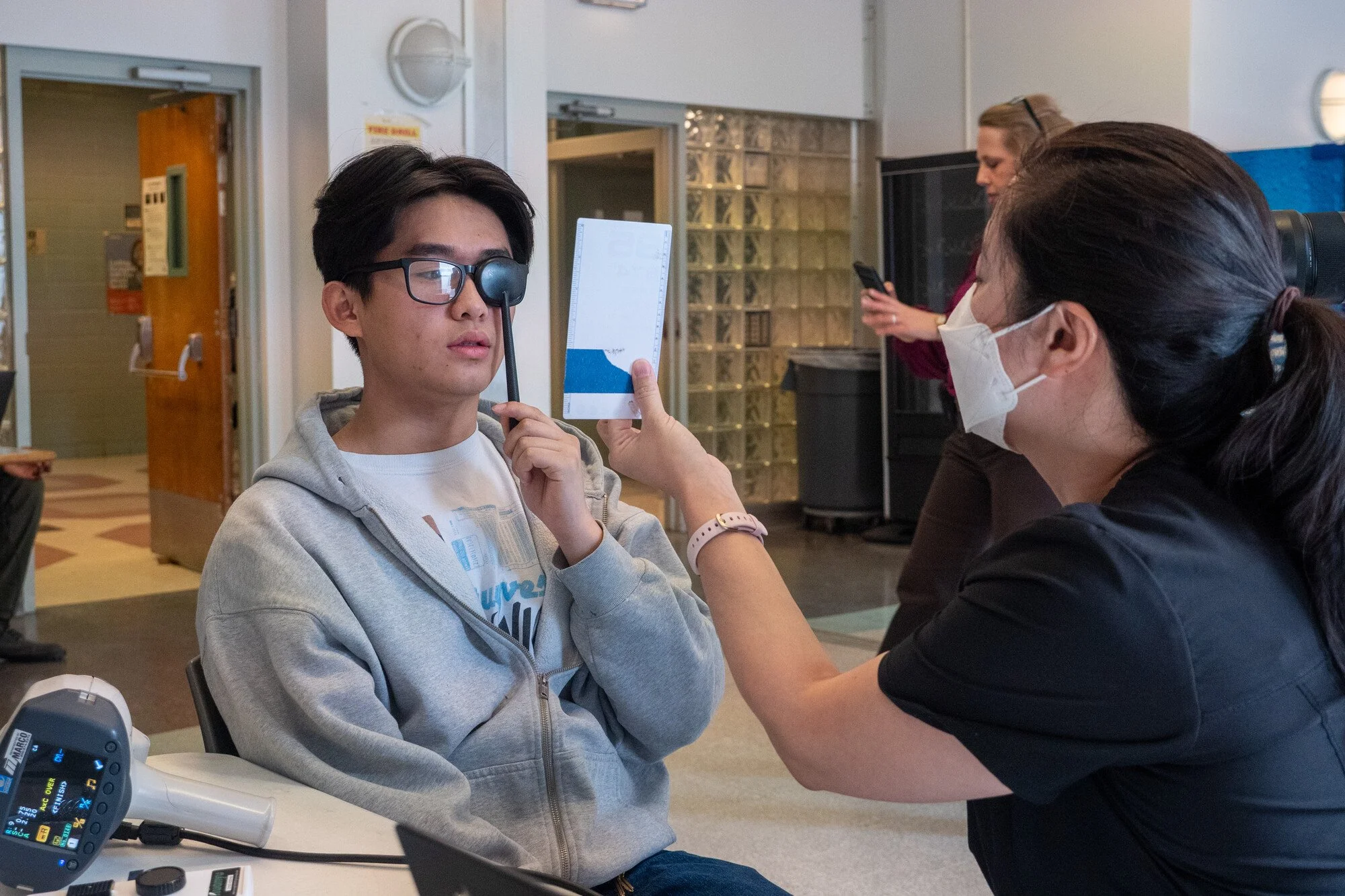
A healthcare worker in a mask holds a vision chart in front of a student during an eye exam (Photo credit: Kathryn Schoenberger, Helen Keller Intl)
Too many children in the United States are struggling to learn simply because they cannot see clearly. According to the National Survey of Children’s Health, fewer than 55% of school-aged children receive vision screenings, despite the critical role vision plays in learning and development. The inequities are especially alarming: Black and Hispanic children are less likely to be screened and more likely to experience unmet vision needs. Nearly one in four children living in poverty lacks access to needed vision care.
Vision health is both a health and an education issue. Children who cannot see the board, read clearly, or participate fully in the classroom are at greater risk of falling behind academically, with learning gaps widening over time.
Although approximately 41 states require school vision screenings, many children fall through the cracks due to inconsistent policies, workforce shortages, fragmented coordination between health and education systems, and barriers to follow-up care. In some cases, new legislation has unintentionally created additional obstacles. For example, early reports from Florida suggest that requiring signed parental consent for school-based vision and hearing screenings reduced the number of children screened by nearly half.
To address these challenges, Adduna Health Partners advised Helen Keller Intl on opportunities to expand equitable US school-based vision screening programs. US Managing Partner Hugh Ewart conducted extensive analysis of vision screening policies and implementation landscapes across states and communities. The findings are helping inform Helen Keller’s future strategy for scaling existing programs in California, Minnesota, New Jersey, and New York and identify gaps in other states, with the goal of ensuring that every child receives a vision screening and, when needed, access to affordable and effective care.
Improving child vision is not only a health priority, but also an investment in educational equity, opportunity, and long-term success.